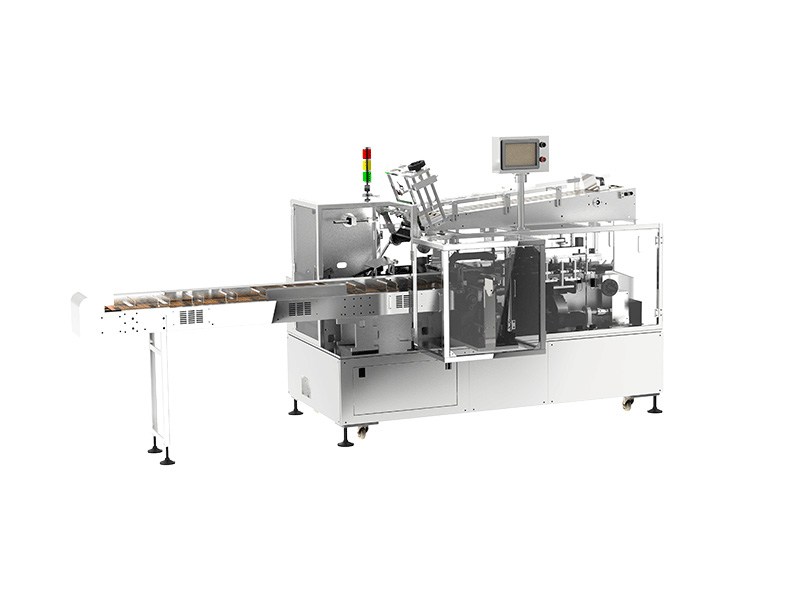
Hoodie Folding Machine: Sizing a Line for Long, Heavy Garments
The problem rarely shows up as a machine failure. It shows up as a bag that will not close cleanly. A 420 gsm fleece hoodie comes off the fold station looking acceptable, the bag opens, the piece goes in at a slight angle, and the seal lands on a fold of fabric instead of flat film. One piece in twelve, maybe one in twenty. Not enough to stop the line, enough to put a rework bench at the end of it.
That is the pattern with heavy garments. The folding mechanism is rarely the weak link. What breaks down is the match between three things: garment length against the machine's rated input envelope, fabric spring-back against the fold plates, and folded block width against the bag you are running.
This article walks through those three interfaces, then the throughput question — which is mostly an infeed question, not a machine question — and closes with the checks worth running before a purchase order.
Buyers tend to open with fabric weight. Fabric weight matters, but flat length is the harder constraint, because it is a hard boundary rather than a gradual degradation. A machine rated to 950 mm before folding does not gradually handle a 1,010 mm parka. It jams, or the trailing edge does not clear the fold zone, or the piece enters the longitudinal station still partly unfolded.
On the fully automatic thick-and-thin model (FC-332C), the rated input envelope is 400–950 mm long and 320–800 mm wide before folding. The single-station multi-functional unit (SA-51A) is rated 400–950 by 320–850 mm. Those two numbers decide more purchase outcomes than any brochure claim about speed.
So the first practical step is not a specification comparison. It is a tape measure and three garments off your packing table:
Write those three numbers down. If the longest piece clears 950 mm, the conversation shifts from model selection to configuration: whether the piece folds in a different orientation, whether it runs as a separate short run on another station, or whether it does not belong on an automated line at all. Better to establish that in an email than on the floor in month two.
The generic version of this argument says heavy fabric needs stronger fold arms. That is true but not useful, because it does not tell a production manager what to look at. Three specific failure modes are worth naming.
Fold-edge spring-back. Fleece and brushed back fabrics store more elastic energy than single jersey. When the fold plate retracts, the crease partially opens — a millimetre or two on a thin tee, absorbed by the bag, but a visible lip on 400 gsm fleece. That lip is what catches on the bag mouth.
Interlayer slip. A hoodie is not one layer at the fold. At the side seam you may be folding four to six layers — body panel, pocket bag, seam allowance, sometimes a lining. They do not compress identically, and the inner layer migrates during the lateral fold. The fold looks square from above and is a few millimetres out at the bottom edge, which shows up later as a stack that will not sit flat.
Bag-mouth mismatch. This one is arithmetic and gets skipped constantly. A folded block 340 mm wide does not enter a 340 mm bag. Clearance is needed for the film to open, for the piece to travel, and for the seal jaw to close on flat film rather than on fabric. On the FC-332C the folded block runs 200–400 mm long, 220–360 mm wide and 5–70 mm high, against a bag range of 280–450 by 240–420 mm. The ranges overlap deliberately, which leaves clearance at both ends. If your bag order sits at the bottom of that range while your garment folds at the upper end, no amount of tuning fixes the seal. Change the bag.
The 5–70 mm folded height figure is the one buyers underuse. It is a thickness budget: how much garment can sit in the fold before the block is too tall to enter the bag mouth squarely. A hoodie with a thick hood folded into the body uses more of it than the same piece with the hood laid flat.
Catalogues quote pieces per hour. Anyone who has bought a folding line before discounts that number, and rightly. The rated figure assumes a garment the operator can place in one motion at a pace sustainable for a full shift.
On heavy garments the rate-limiting step moves. On a T-shirt run the hands are the constraint but the motion is short. On a hoodie run the hands are still the constraint, and the motion now includes orienting a hood, flattening a pocket, and squaring a piece that wants to drape. No servo upgrade changes that.

Rather than argue about a published number, build your own. Time the infeed step on your current manual packing table with a stopwatch, on the garments you actually run:
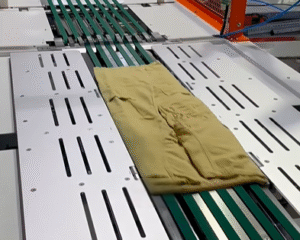
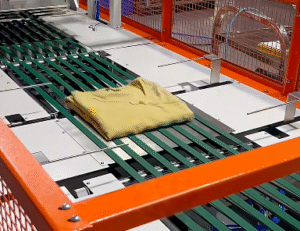
Steps 1 to 3 are yours. Step 4 is the machine's. Your line rate is set by whichever is longer, and for heavy garments steps 1 to 3 usually win. Twenty seconds of placement against a fifteen-second machine cycle means your real output is governed by placement, and the machine's rated speed is a ceiling you will never reach.
The consequence for line design: if placement is the constraint, a second infeed position or a second operator achieves more than a faster fold mechanism. It also explains why the same machine appears to lose output when a buyer moves from thin to heavy garments — the machine has not changed, the placement has.
Mixed-category operations — a casualwear brand running tees, hoodies, and overshirts from the same packing area — have two options: two lines, or one line with changeover discipline. The second option is usually correct on floor space grounds, but only if the changeover is genuinely fast.
Changeover involves two kinds of adjustment, and they take different amounts of time and skill.
Parameter recall. Fold dimensions, bag size, seal timing, conveyor speed — these live in the HMI as stored recipes, recalled in seconds. The FC-332C stores multiple garment configurations, so a tees recipe and a hoodie recipe both sit on the machine rather than being rebuilt.
Mechanical adjustment. Guide rail width, fold plate positions, bag magazine, seal jaw height. This is where changeover time accumulates. Most are hand-crank or quick-release with no tools, but the operator still has to walk the settings and verify each one.
The number that matters is not the parameter recall time. It is the time from last piece of the previous run to first saleable piece of the next run, test piece included. Ask for that figure, and ask which adjustments are tool-free. A supplier who answers "about ten minutes" without describing what gets adjusted is guessing.
One more point on mixed runs: if thick garments are less than roughly a fifth of your volume, the changeover cost may exceed the labour saving on those runs. In that case the honest answer is to fold the heavy styles on the single-station unit and keep the automatic line running thin garments continuously, rather than interrupting the line twice a day.
The two configurations differ less in folding principle than in what happens after the fold. Both fold laterally on both sides, then longitudinally. One bags automatically; one hands the folded piece to an operator.
| Item | SA-51A single-station | FC-332C fully automatic |
|---|---|---|
| Folding principle | Lateral both sides, longitudinal fold | Lateral both sides, one to two longitudinal folds |
| Input length, before folding | 400–950 mm | 400–950 mm |
| Input width, before folding | 320–850 mm | 320–800 mm |
| Folded length | 200–370 mm | 200–400 mm |
| Folded width | 220–320 mm | 220–360 mm |
| Folded height | not specified | 5–70 mm |
| Bagging | manual or downstream | integrated, bag 280–450 × 240–420 mm |
| Sealing | optional hot-cut | tape supply standard; tear-off or hot-cut sealing optional |
| Optional modules | touch screen, conveyor, auto stacking, hot-cut sealing | auto stacking, auto labelling |
| Power / air | AC220V, 0.2 kW, 0.5–0.7 MPa, 150 L/min | AC220V, 2.5 kW, 0.5–0.7 MPa, 600 L/min |
| Footprint | 1160 × 880 × 800 mm, 250 kg | 7030 × 1020 × 1475 mm, 1477 kg |
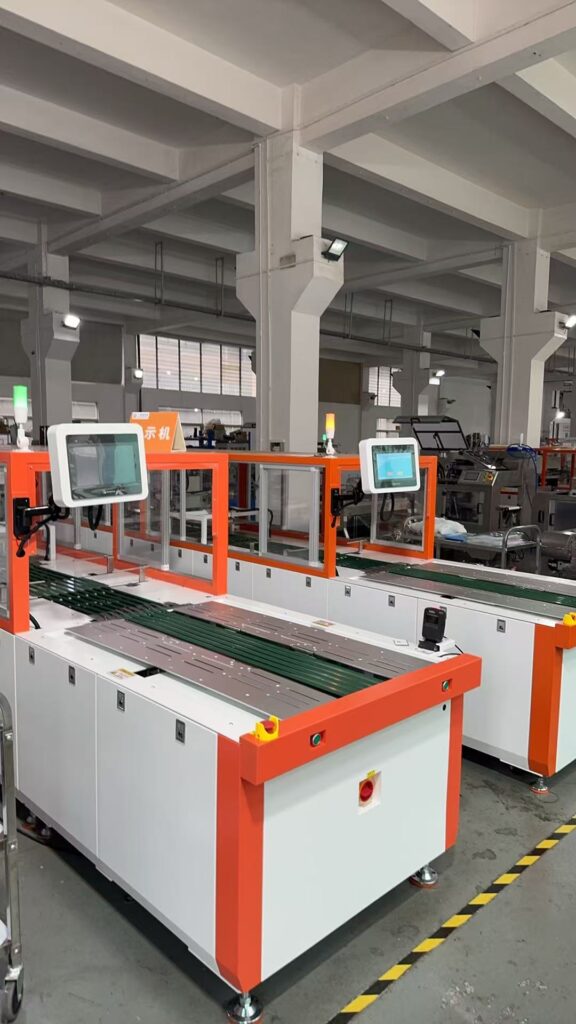
Read the table for constraints, not features. The single-station unit's narrower folded width (220–320 mm) suits a tighter bag format; the automatic unit's taller block allowance (up to 70 mm) is what lets a heavy hoodie through without fighting the bag mouth. The air figure — 150 against 600 litres per minute — is the one most often missed at site planning, and the one that stops a commissioning.
Sample trials settle those questions, but only if the samples are chosen to fail rather than to flatter. Four pieces:
Then watch six things, in this order:
That last check predicts your rework rate: a machine producing one good pack and four marginal ones passes a demonstration and fails a shift.
Can the machine fold a hoodie with the hood attached?
Yes, with a placement convention. The hood is positioned at the collar end so the garment enters the fold zone body-first, and the hood is folded in with the body during the lateral fold. Hoods with a heavy lining or a rigid brim need to be checked in a sample trial, because they add local thickness at exactly the point where the fold plate closes.
What happens with drawstrings and toggles?
Loose cords are laid along the body before the piece enters the fold zone, adding a second or two to the infeed step. Toggles and metal cord ends are the higher risk — they sit near the fold line and can mark the fabric or foul the seal. Flag them in the trial.
Is 950 mm a real limit or a conservative figure?
Treat it as a real limit. It is the rated input envelope for both models, and the figure exists because the fold geometry needs reference points at both ends of the garment. Garments beyond it are not a tuning problem; they need a different configuration or process. Measure first.
Can we run T-shirts and hoodies on the same machine in the same shift?
Yes, and it is the normal pattern for mixed-category operations: a recipe recall plus physical adjustment of guide rails, fold plates, and bag magazine. Ask for changeover measured from last good piece to first good piece, not from button press to button press.
The useful first step is not a quotation but a fold trial on the styles you actually ship. Send four pieces — longest, thickest, printed, and the one that gives your packers trouble — with the fold specification and bag dimensions you need, and we run the full fold-bag-seal cycle on video. You see the pack, the seal, and the stack before any commercial discussion.

 Guangdong Huanlian intelligent Packaging Group Co., LTD
 86-15915757872
 86-13602308576
 sales@huanlianauto.com
 No. 7, Silver Lake Road, Sangyuan Industrial Zone, Dongcheng District, Dongguan City
 Back to top


 86-15915757872