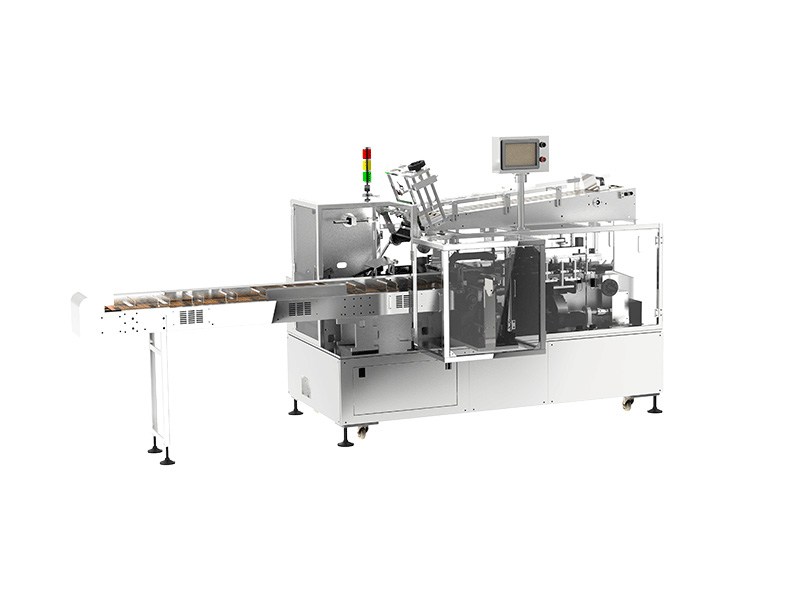
Sauce Packaging Line Automation: Count the Touch Points Before You Count the Savings
A sauce packaging line earns its keep the moment you set the machine count aside and start counting the times a jar is touched between the capper and the pallet. That count — not the brochure speed of any single machine — sets the hygiene exposure, the label consistency, the case counts, and the staffing bill of a condiment packing operation. This article walks through a full-line automation project delivered for a chili sauce producer in southern China supplying retail chains, and rebuilds the decision the way the project team actually made it: as a touch-point audit, station by station.
The project covered everything from jar infeed to palletized finished goods. What follows is the part that transfers to any glass jar or bottle line in sauces, condiments, and liquid foods: which stations carry the touches, what each touch risks, which machine removes it, and where a person still belongs.
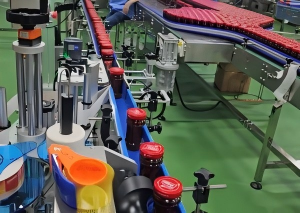
A sealed jar of chili sauce is already a closed product when it reaches the packing area. Everything downstream of the capper is secondary packaging, so the hygiene argument is more precise than "machines are cleaner than hands." It is about audit trails. Every station where a worker handles jars or cases is a control point you have to document: procedure, training records, glove discipline, shift handover. A mechanical station, by contrast, is a setting you record once and can print on demand. When a food safety auditor walks the line, that difference decides how long the visit lasts.
The second reason is variability. Label position drifts across an eight-hour shift as hands tire. Case counts miss. Tape tension wanders. Each of these failures is small on its own; together they produce a packing area that never runs two identical days, and a retail buyer who notices.
The third reason is labor, quantified later in this article with public wage data rather than a quoted figure.
Before specifying any equipment, the project team drew the existing line as a map of hand touches. On a conventional sauce packing line, a jar can be handled five times before it reaches a pallet.
| Station | What hands do there | What the touch costs |
|---|---|---|
| Jar organizing | Turning jars upright, setting spacing for the labeler | Repetitive-strain role with high turnover; one spacing error cascades into a mislabeled jar |
| Label application | Judging orientation, pressing the label on | Position drift over the shift, bubbles under the film, batch codes on the wrong jar |
| Case packing | Counting jars, dropping them into open cases | Miscounts, jars standing crooked, flaps crushed at closing |
| Case closing | Folding flaps, taping by hand | Uneven tape, cases reopening in transit |
| Palletizing | Stacking cases by eye | Patterns that vary pallet to pallet, damage in transport |
One step deliberately missing from this table: the protective film on the jar mouth. That seal belongs to the filling and capping interface, upstream of the labeler, and it should be settled in the conversation with the capping supplier — not bolted into the packing line where it complicates every changeover downstream.
The audit question for each row is the same: does a machine at this station remove the touch, and does what it adds in setup and maintenance cost less than the touch does? We ran the same audit logic on frozen dessert cups in a frozen cup cartoning project — the product changes, the counting method does not.
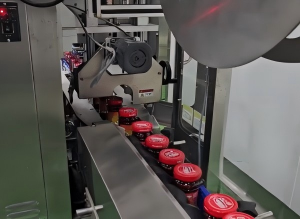
Chili sauce jars are round, frequently embossed with the brand mark on the shoulder, and the label has to land at a fixed position relative to that mark — a round jar plus a hand-applied label is the recipe for a shelf where every jar looks different.
The machine used on this project is a cylinder-positioning round bottle labeler: the jar halts on the conveyor, the label rolls on under a positioning cylinder, and air is squeezed out as it lands. One or two labels per jar — front and back, or a wrap with orientation against the embossing. The published specifications on the round bottle labeling machine product page read: placement accuracy of ±1 mm, a speed range of 20 to 60 jars per minute depending on jar and label size, jar diameters from 40 to 110 mm, jar heights from 25 to 300 mm, and labels up to 285 mm long. Two practical reads from those numbers. The ±1 mm is the figure to hold a supplier to in the trial video, not in a brochure. And jars outside the stated diameter range are a consultation item, not an order-form checkbox.
The same page lists an option worth a separate line in the audit: a coding or inkjet module that prints the batch date onto the label as it is applied. That removes yet another touch — the separate date-stamping step — and with it a classic source of wrong-date recalls.
Case packing is where the touch count drops fastest, and where glass punishes a machine tuned carelessly. The case packer on a full-line configuration — the labeling, boxing, case packing, sealing, and strapping sequence described on our production line page — lifts a complete layer of jars at a controlled force and lowers it into the erected case. Gripper force is calibrated to the jar's weight and geometry during the sample trial, before the line ships; that calibration, not the machine's nameplate, is what decides whether breakage is an event or a routine.
Downstream of the packer, the closing station folds the flaps and tapes each case with the same tape length every cycle, and the palletizer stacks to a stored pattern. Both are unglamorous stations, and both are where a conventional line quietly loses uniformity — pallet after pallet stacked by eye, each one a little different.
One format note before the specs conversation: if your market format is a printed retail carton around one or two jars, rather than bare jars into a shipping case, a cartoning stage enters the line — and carton envelopes are strict, dimension by dimension. Treat any carton format as a sample-verification item during the technical review, never as a catalogue promise.
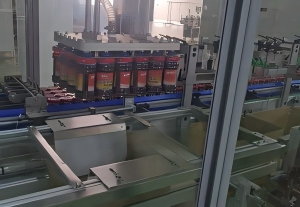
After every other touch is removed, one remains on purpose: the inspection station ahead of the palletizer. A worker confirms case counts, checks that seals and labels are present and sitting straight, and clears anything the machines flag. This is the touch worth keeping because it is the point where the whole line's output faces a trained eye before it becomes a customer's problem.
The staffing shape that results is two people per shift — one at inspection, one monitoring the line. The touch count per jar goes from five to zero; a glance per case is what remains.
The role a sauce line removes has a name in official statistics: hand packers and packagers. In the Bureau of Labor Statistics' May 2025 estimates, the median wage for that occupation is $36,280 a year, about $17.44 an hour. The table below applies that median to the staffing shapes a conventional line actually runs. Wages alone — employer taxes, insurance, and benefits add on top:
| Touch stations staffed per shift | Workers across two shifts | Annual wage cost at the median |
|---|---|---|
| 4 | 8 | $290,240 |
| 5 | 10 | $362,800 |
| 6 | 12 | $435,360 |
Against that, the automated line runs four workers across two shifts. The purpose of the table is not a payback figure — that requires your wage rates, your shifts, and your equipment quotation. The purpose is simpler: every station you leave manual has a name, a wage bill, and a variability profile that you are already paying for today.
A broken jar on a food line is not a jar. It is a sanitation event: the line halts, glass is cleared from a food-contact zone, the area is re-cleaned, production restarts, and the incident is logged. Breakage handling is engineered in — sensors at the picking stage detect a fracture and halt the cycle before fragments travel — but the number that separates a good line from a loud one is the rate, not the response.
The figure to request in any trial protocol: jars broken per ten thousand cycled, measured on video, with your own jars at your own line speed. A supplier who has genuinely calibrated gripper force will show you that number without flinching. Case studies from other food categories — a cookie line we documented in a separate case study — point at the same lesson from the defect side: the money is in what the line stops producing, not in what it produces faster.
A second jar format changes the label size, the gripper setting, the case format, and the pallet pattern. On a recipe-driven line, each of those lives in a stored SKU record recalled from the touchscreen; some gripper and guide parts still swap by hand, and an honest supplier will tell you which. The figure to request is the measured interval from the last good case of the outgoing SKU to the next good case of the incoming one, on video, with your jars. A round number quoted on a slide tells you nothing about the shift your operators will actually run.
Which stations should be automated before the others? On this project the priority order was labeling, then case packing, then palletizing. Labeling carries the variability a retail buyer sees; case packing carries the touch count and the glass risk; palletizing is labor-heavy but tolerant. Inspection stays human.
Where does the jar-mouth film sealing step sit? At the filling and capping interface, upstream of the labeler. It belongs in the discussion with the capping supplier; the packing line docks after it and should not own it.
Can one jar carry two labels? Yes — front and back, or a wrap with positioning against the embossed brand mark. The arrangement is stored per SKU and recalled with the recipe.
What happens when a jar breaks mid-line? Sensors halt the picking cycle, the fragments are cleared, and the line restarts. The question worth asking a supplier is the preventive one: the breakage count per ten thousand jars in the trial.
Can the line dock against existing filling and capping machines? Yes. The labeler carries a floor-type conveyor built to connect to filling, capping, and sealing machines, and the interface design is reviewed during the pre-contract technical stage. For a broader look at what changes when folding and cartoning stages join an existing food line, see our article on upgrading a food packaging line from manual folding to cartoning automation.
The touch-point map above was drawn for chili sauce jars, but the method is product-agnostic, and so is the trial. Send your jars, your label reels, your case blanks, and your target output. The engineering team runs the relevant machine configurations on video: label placement samples against the embossing, case counts, the breakage tally, and the touch count before and after. The trial carries no purchase commitment.
To talk through jar specifications, label formats, and output targets for a sauce, condiment, or liquid food line, contact Huanlian UBL at helen@huanlianauto.com.

 Guangdong Huanlian intelligent Packaging Group Co., LTD
 86-15915757872
 86-13602308576
 sales@huanlianauto.com
 No. 7, Silver Lake Road, Sangyuan Industrial Zone, Dongcheng District, Dongguan City
 Back to top


 86-15915757872