Food Packaging Line Upgrade: From Folding to Cartoning Automation
In many food plants, the bottleneck appears at the same place. Primary processing gets faster, but secondary packaging does not. A frozen dumpling line where three or four operators stand around a bench folding snap-lock cartons. A bakery where the distance between the oven and the shipping dock is covered by seven or eight people erecting, loading and closing boxes. A confectionery workshop that wants to take on one more retail customer but can only get there with overtime and temporary labor. The gap between primary output and packaging capacity is paid for three times over: in overtime wages, in late deliveries, and in packaging quality that drifts from one shift to the next.
By the time a manufacturer reaches this point, it is usually clear that automating a single station will not close the gap. The real question is how to bring carton folding, product grouping, cartoning and case packing together into one continuous secondary packaging line. This article is written for operations and purchasing decision-makers at food manufacturers who are considering that move. It covers what a complete secondary packaging line consists of, how the stations hand off to each other, how configurations differ by food category, and what the upgrade involves in terms of implementation and payback.
Two forces are pushing food manufacturers toward line-level automation.
The first is demand. The Chinese packaging machinery sub-sector recorded roughly 158.1 billion yuan in revenue in 2024, within total packaging industry revenue of 2,068.66 billion yuan across 19,473 large-scale enterprises, according to the China Packaging Federation. Output of packaging-specific equipment reached 1.6325 million units in 2024, up 24.5% year on year on National Bureau of Statistics figures — capacity is being added at a pace that reflects real downstream investment. The China Food and Packaging Machinery Industry Association puts combined 2024 output value for food machinery and packaging machinery at approximately 325 billion yuan, up 8.9%.
The second is regulation. GB 14881-2025, the national food safety standard for general hygienic practice in food production, took effect on 2 September 2026, replacing the 2013 edition. The new version writes hazard analysis and critical control point (HACCP) requirements into the main body of the text, adds allergen management provisions, and extends microbiological monitoring from finished-product testing to process control. Regulatory inspections and factory audits now look for process records, not only final product test results. A line that logs output rate, downtime events and alarm history at every station makes that expectation considerably easier to meet.
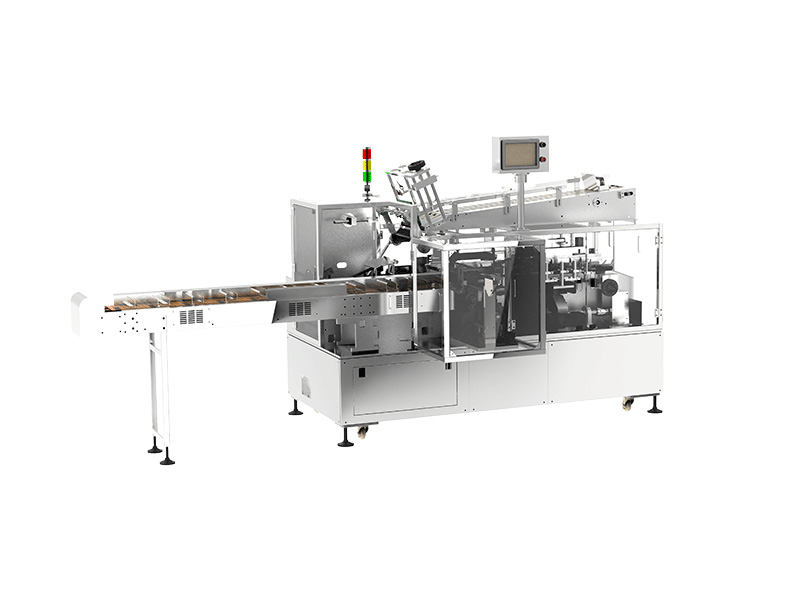
A complete line is built from four connected stations that cover everything between the upstream primary packaging output and the finished shipping case.
Conveyors transfer product and cartons between stations without manual handling. Sensors at each transfer point verify that the product is present and correctly positioned, and stop the line on a genuine fault rather than running defective product through. A central HMI displays the status of every station, the current rate and any active alarms.
For a manufacturer running separate manual stations today, the change is structural rather than incremental. A manual line needs people at every station to move product along. An automated line needs people only at the infeed and the outfeed.
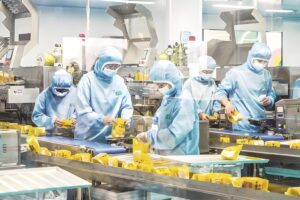
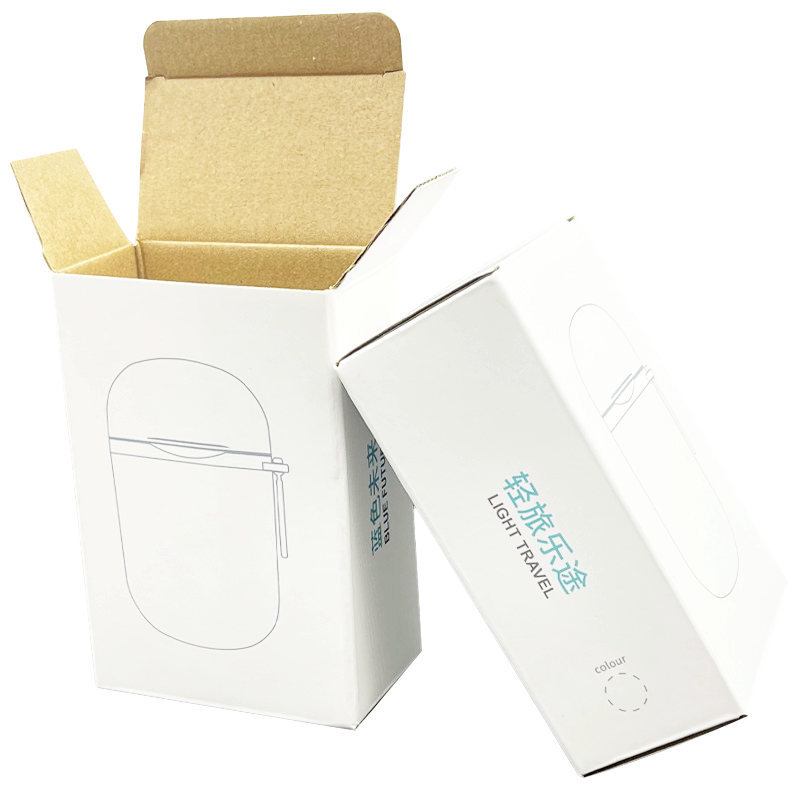
Carton folding machines are the entry point, and the box format determines both the mechanism and the practical rate. Snap-lock, tuck-end, glue-seal and two-piece rigid boxes each require a different erecting action, and the differences are set out in our food carton folding machine guide. Typical speeds for small and medium carton formats fall in the 30–60 boxes per minute range; the actual figure depends on blank dimensions, board caliper and crease quality, and should be confirmed at the pre-sale technical review. Folding speed must be matched to the cartoning machine input to keep the flow stable.
Product infeed and accumulation design follows the product format. Tray-packed products suit a lane-based conveyor. Individually wrapped products suit a counting and grouping system. Pouch and bag products need an unscrambling or singulating infeed.
Cartoning machines load and close, and they set the pace for the whole line. Tuck-end, glue-seal and snap-lock models are available in high-speed and servo configurations, with typical rates spanning roughly 30–120 cartons per minute depending on the build. Because this station determines line throughput, every other station should be specified backwards from it.
Case packing can start manual. At lower volumes a manual case-packing position at the line outfeed is sufficient. As volume grows, an automatic case packer and palletizer matched to cartoner output takes over.
Throughput formula. Size the line from the target, not from the machine data sheet:
Required rate (cartons/min) = daily target ÷ number of shifts ÷ net production hours per shift ÷ 60
Net production hours must exclude changeover, cleaning, breaks and short stops. A plant targeting 30,000 cartons per day on two shifts with seven net production hours per shift needs roughly 30,000 ÷ 2 ÷ 7 ÷ 60 ≈ 36 cartons per minute. Add 15–20% headroom on top of the calculated figure to leave room for future volume growth.
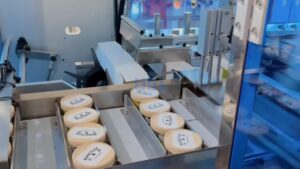
Frozen food. A typical configuration runs a snap-lock carton folding machine into a snap-lock cartoning machine. The erector forms trays or boxes; the infeed receives individually wrapped dumplings, fish fillets or prepared meal components from the freezing line and groups them by count; the cartoner loads and closes. Packaging areas in frozen plants are often held at low temperature, so cold-room suitability — electrical components, sensors and surface materials under cold and condensation — has to be confirmed during project review rather than assumed. See our frozen food cartoning machine guide for format and product-matching detail.
Bakery and snacks. Tuck-end or glue-seal carton folding machines feed matching cartoning machines. The infeed receives flow-wrapped biscuits or individually wrapped confectionery and groups by count. Sealed cartons typically pass a labeling station for retail barcode application before case packing. Glue-seal closing gives better seal integrity and distribution strength, which matters for manufacturers with a high e-commerce share. Related reading: snack cartoning machine handbook and the cookie glue-seal cartoning case study.
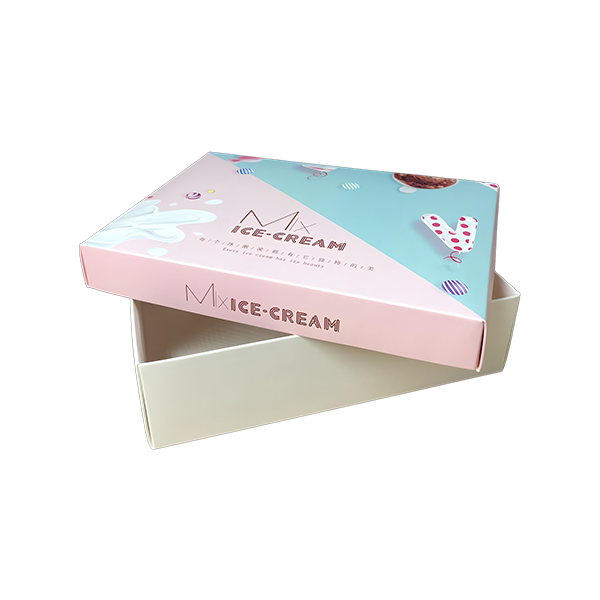
Premium and gift food. Two-piece rigid box erectors run at lower rates but deliver the presentation quality that premium chocolate and gift sets need. The line is usually built around a rigid box erector, a semi-automatic loading position where operators place product into the formed box, and a closing station. Trading rate for presentation value is the logic of this configuration. For manual lines that only need part of the chain automated, a standalone automatic cartoning machine often delivers the larger share of the labor saving on its own.
Bakery and confectionery at higher volume. Cake and pastry producers moving off manual lines follow a similar pattern to the snack configuration, with format and infeed design tuned to softer, more fragile products — covered in our cake cartoning machine article.
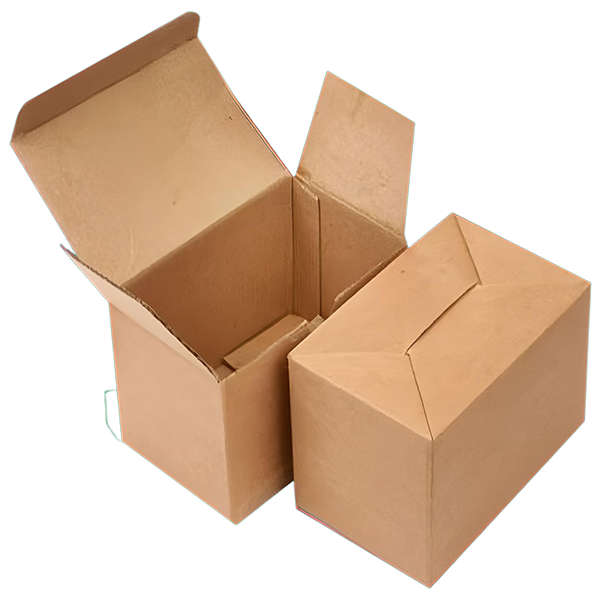
The value of line automation is not limited to labor. Every station applies the same mechanical action to every unit: the erector produces boxes to the same dimensions, the infeed groups the same count, the cartoner loads and closes to the same position, the case packer stacks the same way. That consistency chain means each case leaving the line carries the same quality characteristics as every other case in the shift.
For plants under food safety audit, the process data is itself evidence. Station sensors verify correct operation continuously, and the central HMI records output, downtime and alarm history for each production shift.
On the equipment and carton side, the following published standards frame the design and selection work:
There are two upgrade paths, and both are legitimate.
Staged integration spreads investment across budget cycles and lets the workshop absorb one machine at a time. A common sequence is a folding machine first, a cartoning machine in the following cycle, and automatic case packing later. This works, provided the interfaces are planned from the start: conveyor heights, control signal protocols and station speed matching all need to be considered up front to avoid rework later.
Single-phase installation compounds the labor saving and throughput gain from the first day of production and avoids repeated shutdowns for installation. It requires a larger single commitment and stronger project management on the customer side.
Whichever path is chosen, the pre-sale technical review should produce three documents: a line layout drawing covering machine footprints, conveyor routing, maintenance access and operator positions; a speed analysis table for each station; and a labor comparison showing operator requirements before and after automation. At Huanlian UBL these are delivered together with the sample trial data so that the decision can be made on documented figures rather than estimates.
Labor saving is the most direct part of the calculation, and it compounds across stations. A manual line running two shifts with eight workers — two folding, four loading and closing, two case packing — can typically be reduced to three operators per shift after full automation: one at the product infeed, one at the case-packing outfeed, and one roving operator for magazine reloads and line monitoring. That is six workers across two shifts instead of eight.
At a fully loaded labor cost of roughly 70,000–90,000 yuan per worker per year, removing two workers saves on the order of 140,000–180,000 yuan annually. Removing six, in a line that was more heavily manual to begin with, saves roughly 420,000–540,000 yuan per year on the same basis. Against a mid-speed full line investment, that produces a payback period commonly in the 12–24 month range at two shifts, and shorter at three shifts or in higher-cost labor markets. The durian production line case study and the detergent sheet cartoning case walk through this arithmetic on real projects, with the payback assumptions stated openly.
Capacity flexibility also belongs in the return: an automated line can be sped up within its operating range or run additional shifts, while a manual line can generally only add people — and in the current hiring environment that is increasingly the harder option.
Lead times for standard and custom configurations, warranty terms and service response commitments are set out in the contract. We recommend confirming each of these in writing during contract negotiation.
Can machines be added to an existing line one at a time? Yes. Staged integration is a common path — a folding machine first, a cartoning machine in the next budget cycle, automatic case packing later — provided the conveyor interfaces and speed matching are planned at the outset.
How much floor space does a full line need? A line built around folding, cartoning and case packing commonly occupies 30–50 m², depending on machine sizes and conveyor length. A layout drawing is produced during the pre-sale review to confirm the fit with the available space.
How many operators does a full line require? Typically two to three per shift: one at the product infeed, one at the case-packing outfeed, and one roving operator handling magazine reloads, changeovers and line monitoring.
Can the line handle multiple product SKUs and carton formats? Yes. Carton folding and cartoning machines support format changeover for dimensional adjustments, commonly within a matter of minutes. The HMI stores recipe settings for each SKU, and the operator selects the SKU to initiate the changeover sequence. Actual changeover time depends on how far the formats differ and should be confirmed from trial data.
What is the typical payback period? On the conservative basis set out above, a two-shift operation commonly sees payback in 12–24 months. Three-shift operations or higher labor cost markets can be shorter. The calculation should be run with your own labor replacement numbers.
Can the equipment run in a cold room for frozen food? Yes, but cold-room suitability needs to be confirmed at project review — electrical components, sensors and surface materials in cold, high-humidity conditions, plus the conveyor arrangement for passing through temperature-controlled wall openings.
Does an older workshop need electrical or compressed air upgrades? Machine technical data sheets list the voltage, power and compressed air requirements for each position. A site survey during the pre-sale stage will confirm whether distribution and air supply capacity need to be upgraded.
How are training and after-sales support handled? Training is delivered during installation and commissioning, on the customer's machines, with the customer's product. Support scope, response arrangements and warranty periods are as agreed in the contract.
Start with a product and carton format review. Send your product samples and carton blanks to Huanlian UBL for a trial run on the relevant machine configuration. The team provides video documentation of the test results, a line layout proposal, and a documented payback analysis based on your labor structure and output requirements. The evaluation is provided at no cost and does not require a purchase commitment.
Huanlian UBL is the export-facing brand of Guangdong Huanlian Intelligent Packaging Group, based in Dongguan, Guangdong, founded in 2013, a national high-tech enterprise certified to ISO 9001. The group specialises in customised automated secondary packaging lines — carton folding machines, cartoning machines, bagging machines and labeling machines — serving food and catering, beverage, pharmaceutical, household chemical and other industries, with equipment exported to more than 50 countries and regions.
To discuss your line configuration, carton formats and output targets, contact the team through ublpack.com or explore the machine range in the product section. For food applications specifically, the food carton folding machine guide and the frozen food cartoning machine guide cover station-level selection in more detail, and our detergent sheet and laundry strip articles cover the same upgrade logic in non-food categories.

 Guangdong Huanlian intelligent Packaging Group Co., LTD
 86-15915757872
 86-13602308576
 sales@huanlianauto.com
 No. 7, Silver Lake Road, Sangyuan Industrial Zone, Dongcheng District, Dongguan City
 Back to top


 86-15915757872